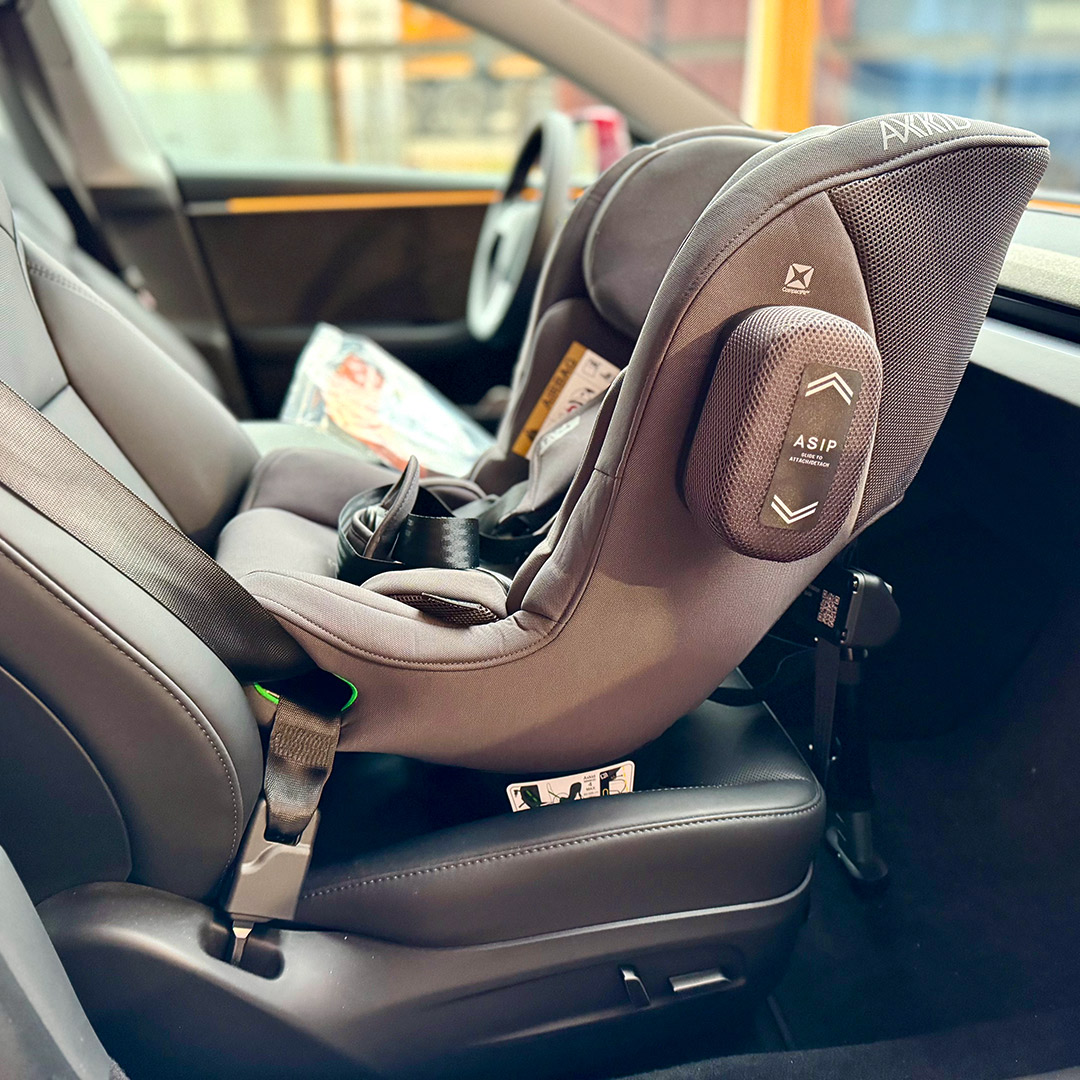
Are children safe in the front passenger seat?
When it comes to children no position is as misunderstood as the front passenger seat. In many countries it’s called a death trap. In others it’s an excellent place with many advantages. How can opinions vary so much? Can a deactivated airbag be trusted? And what are the facts, should children sit in the front seat?
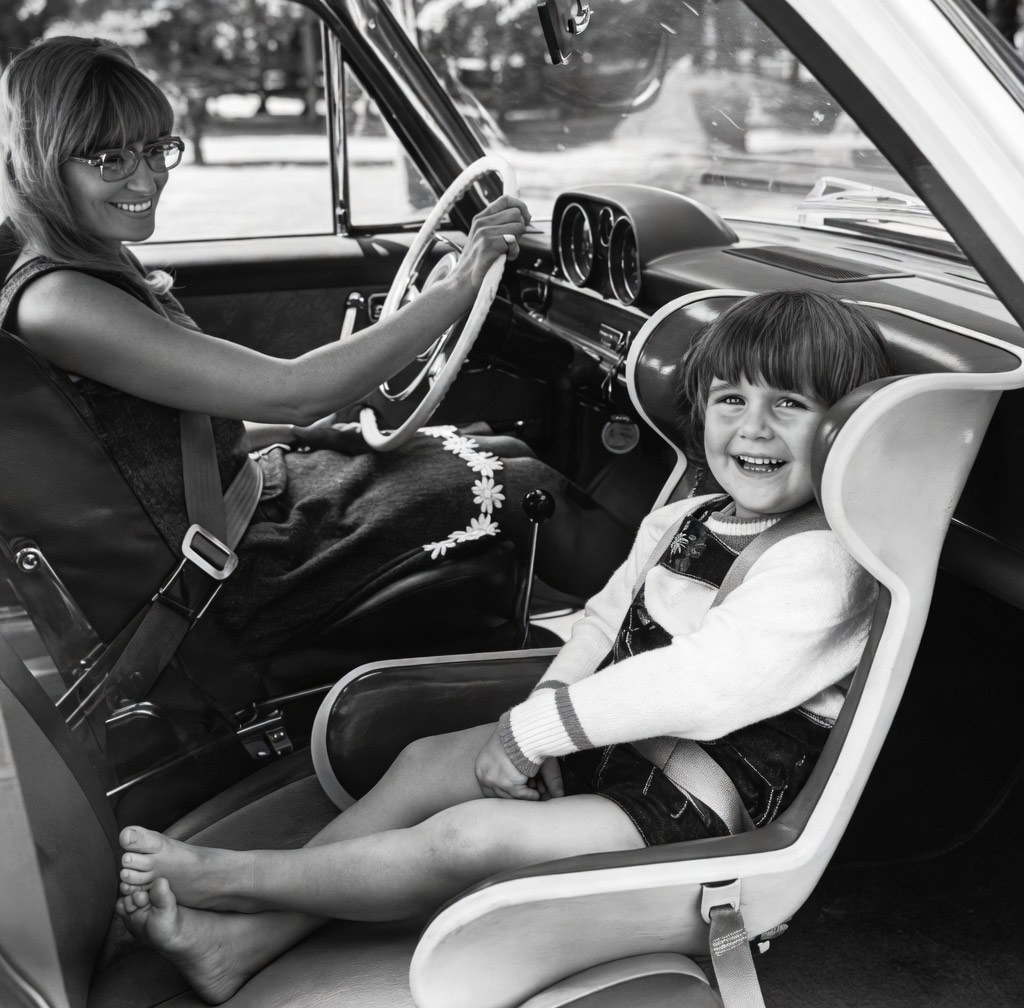
In Sweden front passenger seat has been used for rear facing children since 1967. Much has changed since then but rear facing seats 50+ years later both look and are installed in a similar way. Experiences in Sweden with children in the passenger seat, both rear and also forward facing in high back booster seats (HBB), are nothing short of fantastic. We generally say that all positions in the car are equally safe but front passenger is a favourite when looking at all factors including safety. Front seat might not always be a great option but it should never be doubted due to safety.
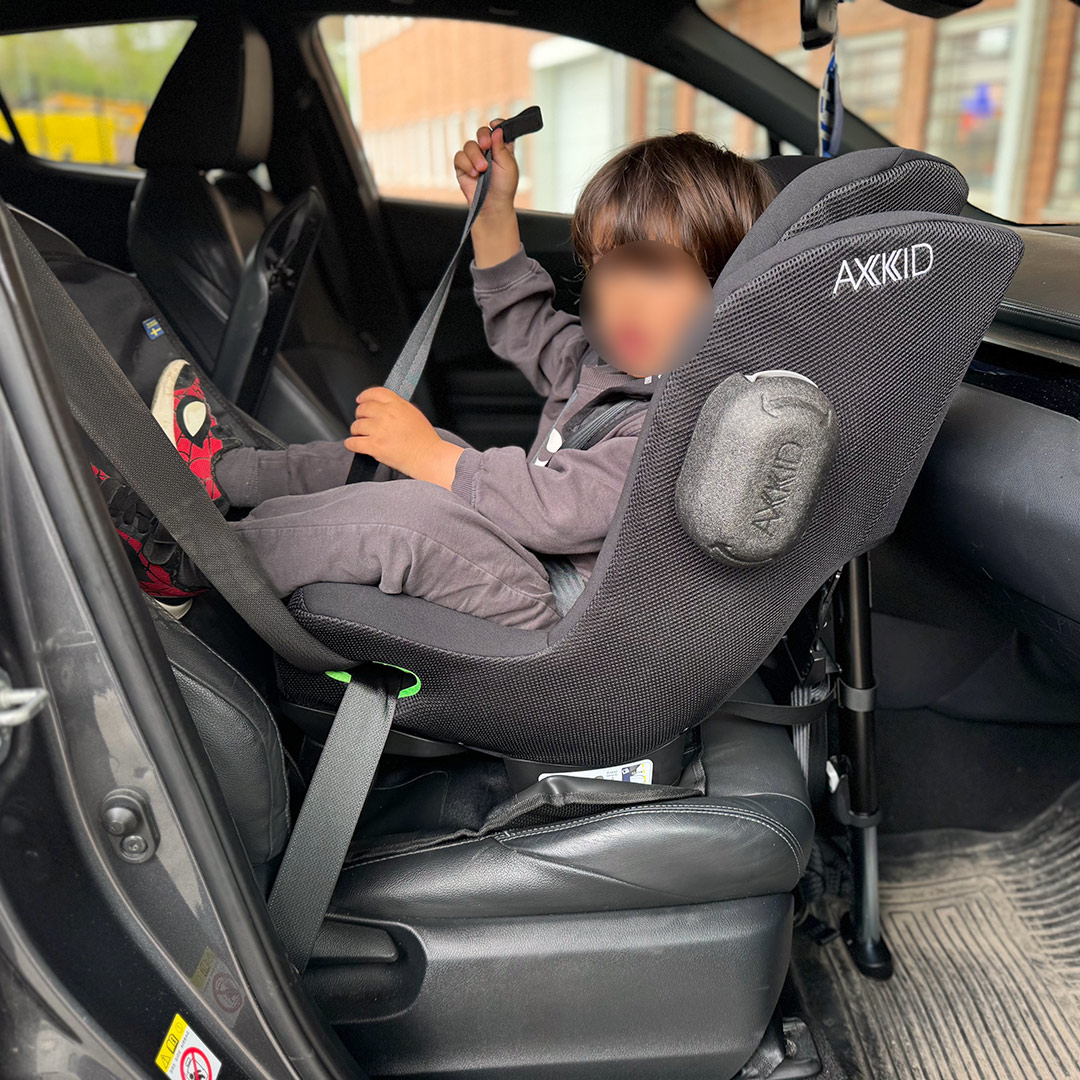
Although we know through research, statistics and Swedish experiences that the front seat is a fantastic place some countries are out of touch with reality. Children in front seat might be forbidden or rear facing over a certain age not permitted. No other EU country is likely as retarded as Spain, a third world country regarding child safety in cars, where children under 135 cm are forbidden in front passenger seat. Grandma sitting unbelted in the back seat with a two-year old in her arms with driver having had one bottle of wine is fine. But children in front seat with airbag off, a favourite and ultra-safe place for kids, is supposedly dangerous.
Airbag must of course always be turned off for rear facing kids. If a child is sitting forward facing in a HBB then check car manual whether it should be active or not. Volvo in particular now recommend that airbag should be active when using a HBB up front. Much progress has been made and airbags now explode more gently but also provide better protection. This recommendation often applies retroactively. If you have an older Volvo it’s possible that airbag should be active for a forward facing child. If unsure always turn airbag off.
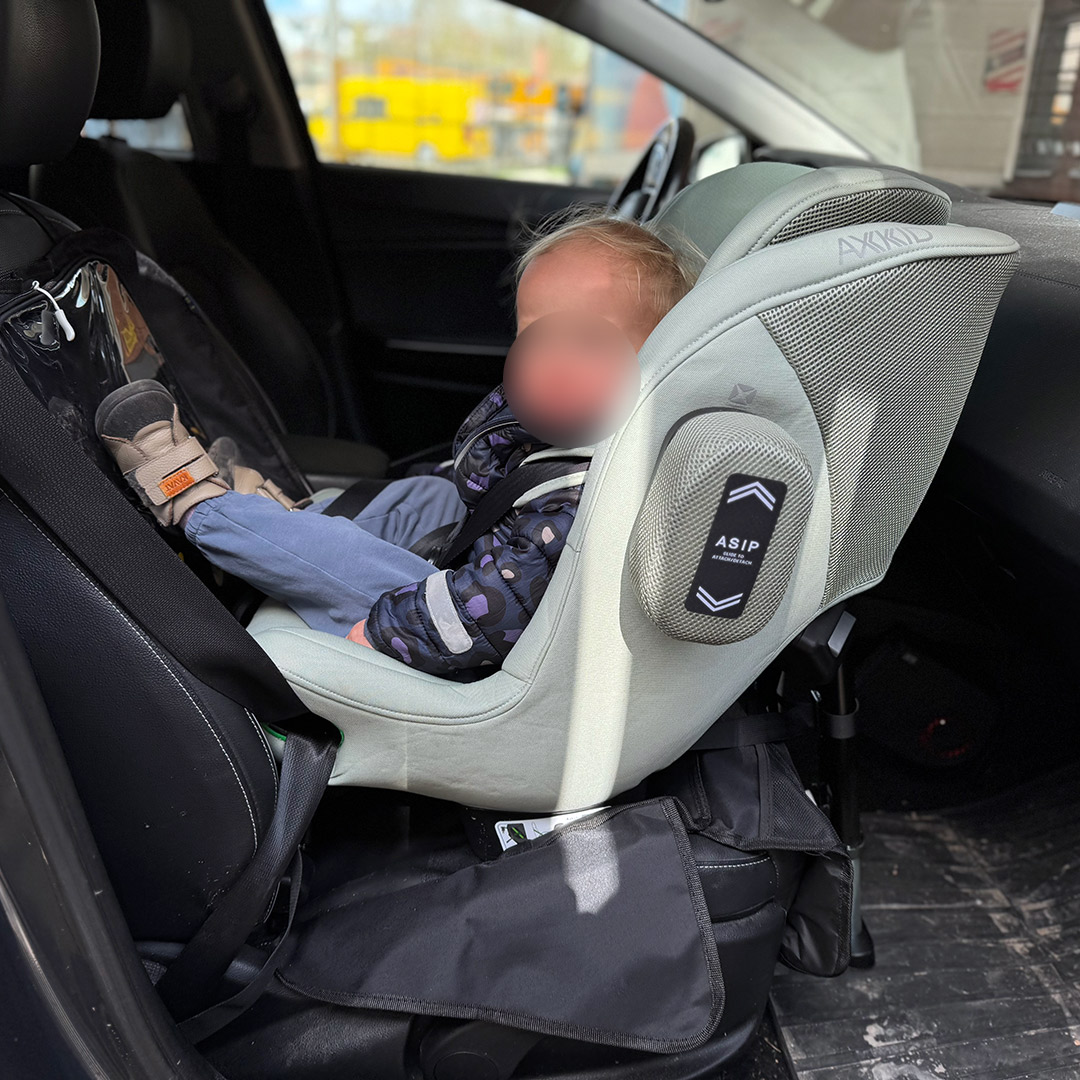
Can you always trust that a manually turned off airbag isn’t active? Absolutely! Don’t believe all the nonsense and crazy rumours. We have no cases where an airbag manually turned off with a key, button or via the information menu has exploded. There are very few other cases where a deactivated airbag has exploded and then always in cars where deactivation in a workshop has been done incorrectly.
In Sweden we have a crazy obsession with child safety in cars and therefore most accidents are studied in detail. We therefore know from experience that front passenger seat provide awesome safety for both adults and children. Over the years we’ve had horrible accidents with rear facing children in the front seat, frontal collisions with buses and trucks, where most are killed and child is left with a few bruises.
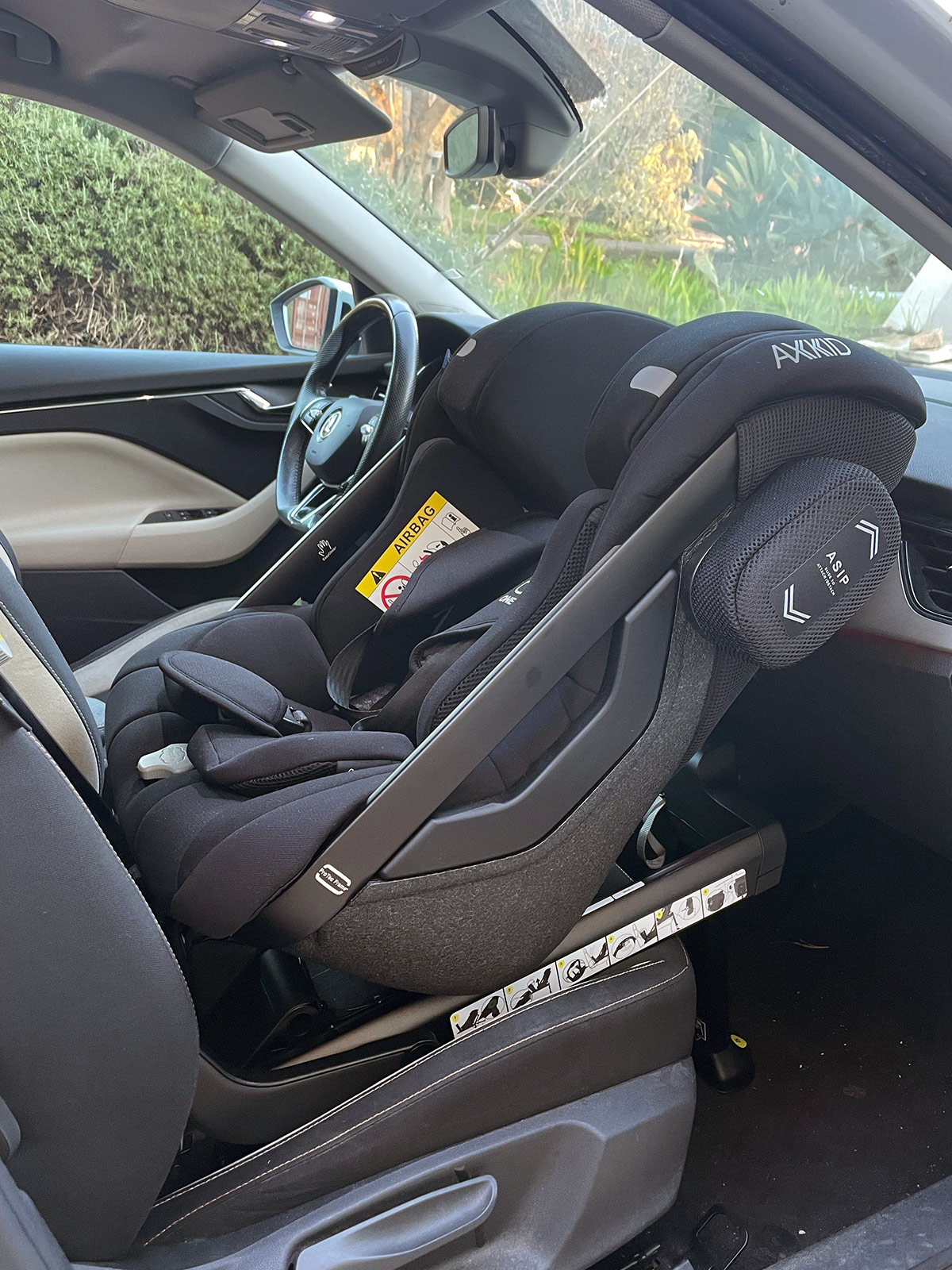
Why is the front seat so great? A soft factor is the creation of more flexible placement. If front seat can’t be used fitting just two children rear facing can be difficult. You may even have to change cars which is expensive and complicated. In terms of safety, cars are optimised for the front seat since there is always someone sitting there and a high percentage of accidents take place with only a driver in the car. We have the dashboard, which is the strongest part of the car, providing great protection. Children also often feel more relaxed in the front seat with better visibility and possibly less motion sickness. Seeing mom or dad can also have a calming effect on the youngest ones.
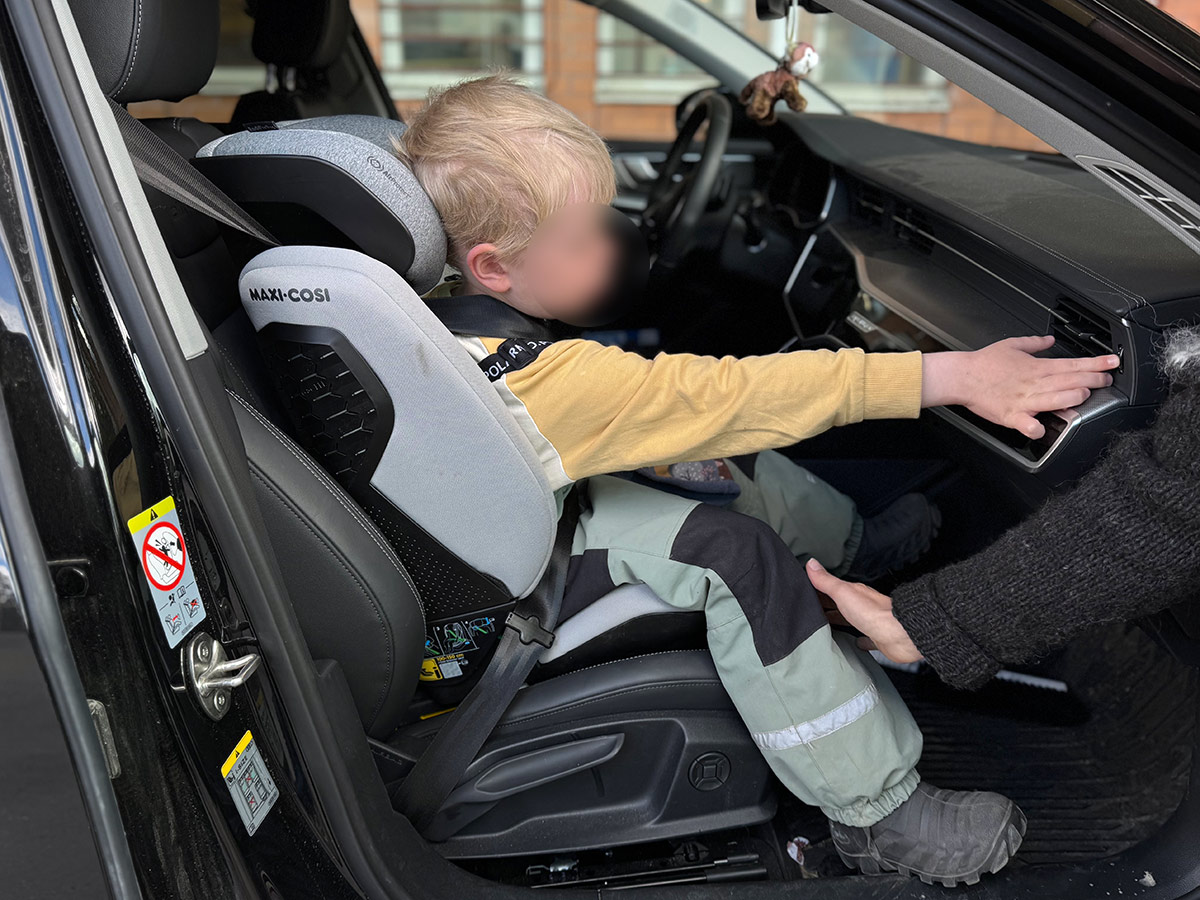
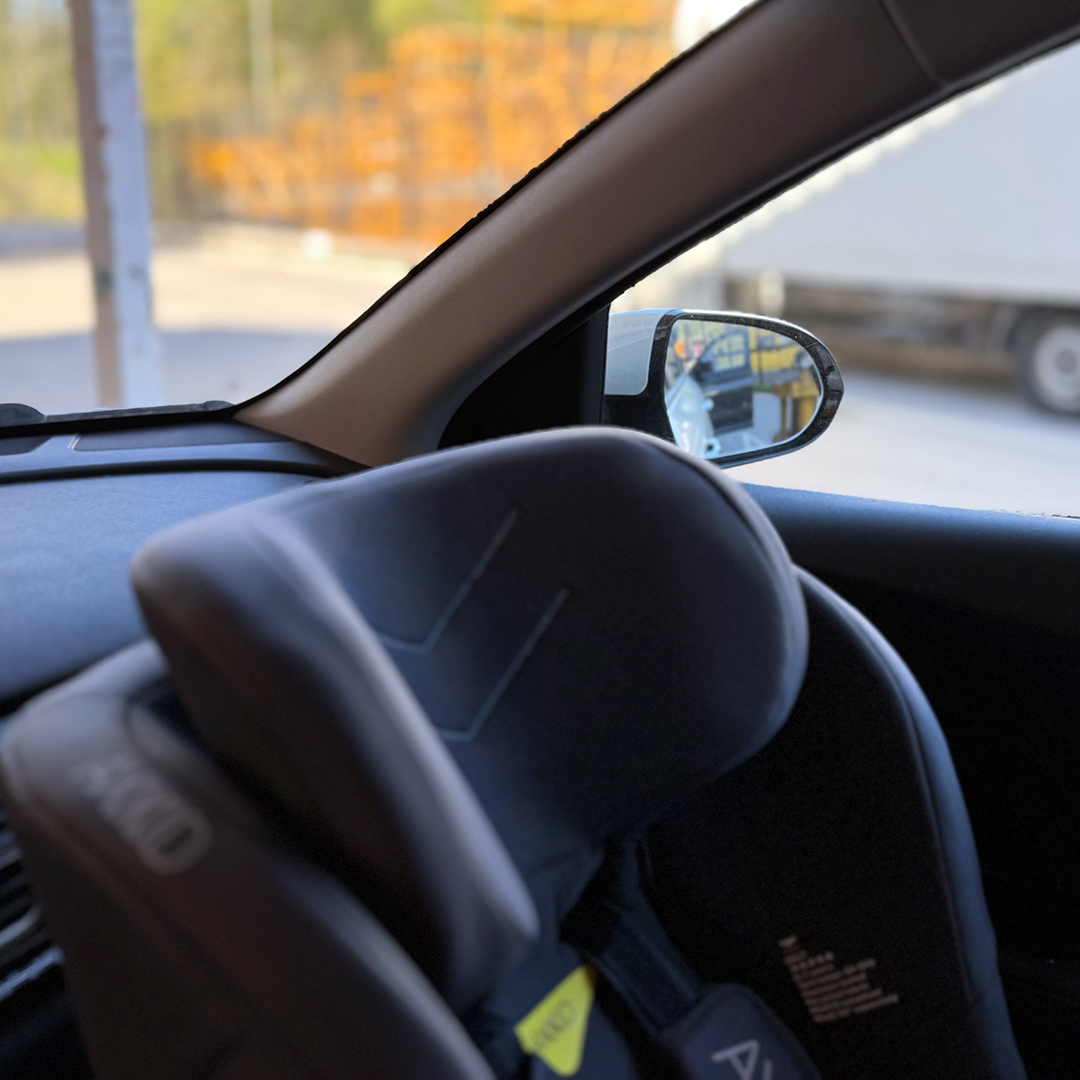
There are three challenges with rear facing seats up front. Number one is visibility in the right mirror which often is poor. Thankfully, we have several seats (Klippan Opti 129, Axkid Minikid 3/4/Movekid/Minikid 4 Pro/Minikid 4 Max and Axkid Minikid Core) which are not only awesome but almost always provide good visibility in the mirror. Number two is difficulty with providing good legroom for a rear facing child unless you have a Volvo. Only Volvo has attachment loops under the dashboard which makes installation easier. It’s very unusual for children to complain about legroom but it’s very common for parents, or grandparents, to be concerned. Bent legs does not pose a safety risk and children have a soft body and don’t want to sit with straight legs like us adults.
The third challenge is where to attach the tether straps. This is always done under front of seat rails which is possible in all cars except Tesla (attachment loops are installed). A common mistake is trying to provide lots of legroom for child even though you don’t have a Volvo. The car seat is then leaning against dashboard but tether straps are slanted backwards and seat moves backwards and feels loose when tightened.
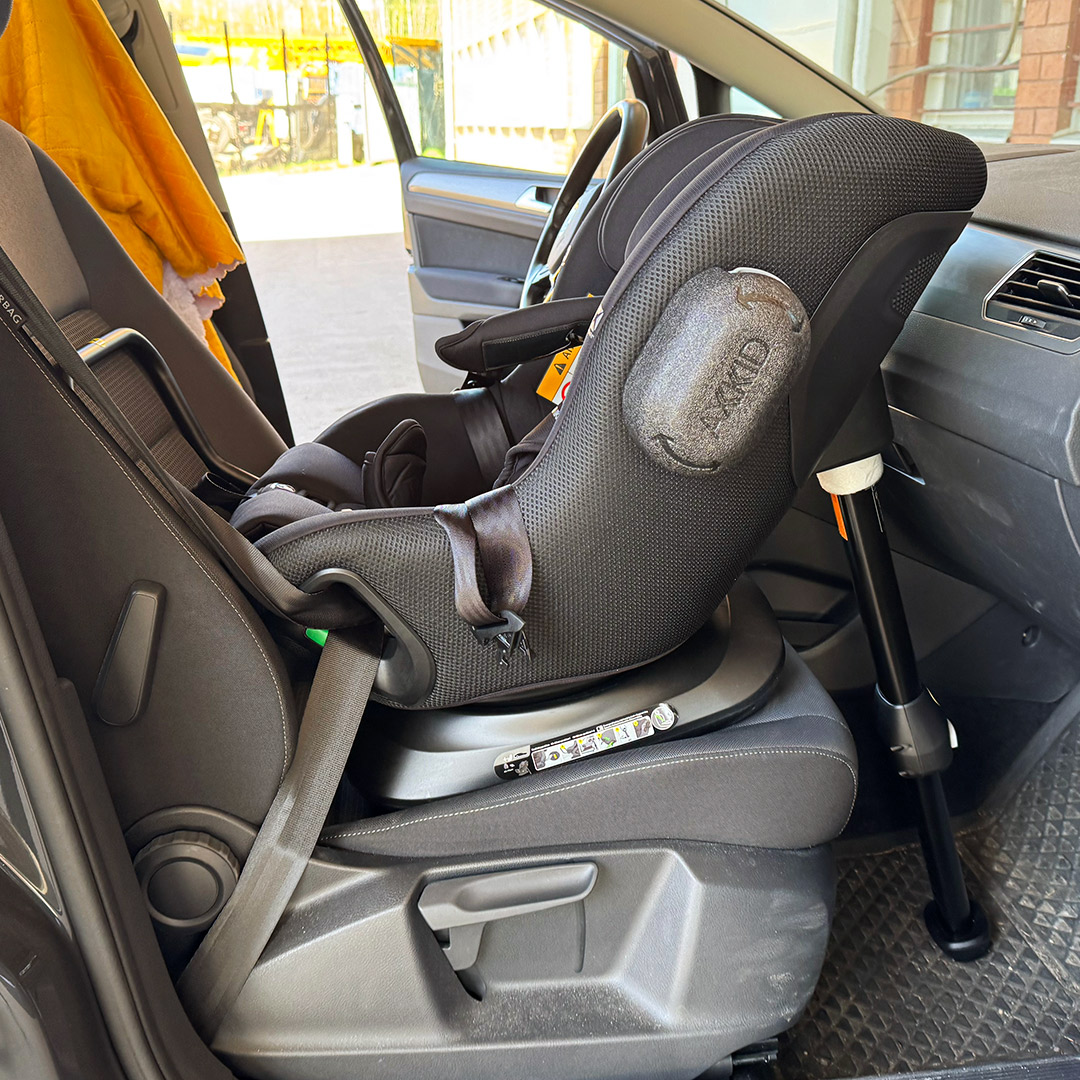
Isofix works great in the front seat but is unfortunately rarely available. Thankfully we now have a great rear facing seat with belt installation but without tether straps. It’s Axkid Minikid Core which is installed with seat belt and no straps despite its impressive safety features. Thread seat belt through front of seat, lock it with the built in clamps and then fold out support leg. Done! Visibility in right mirror is also great in most cars. Minikid Core will last rear facing to around 125-130 cm, can handle 28 kg and has passed the difficult Plus Test. The seat will work nicely up front but also fits well in the back seat thanks to its compact size.
As a summary. Don’t hesitate to place your rear or forward facing child in the front seat for safety reasons. Always triple check airbag status, select a suitable seat and make sure that visibility in the right mirror is good.